
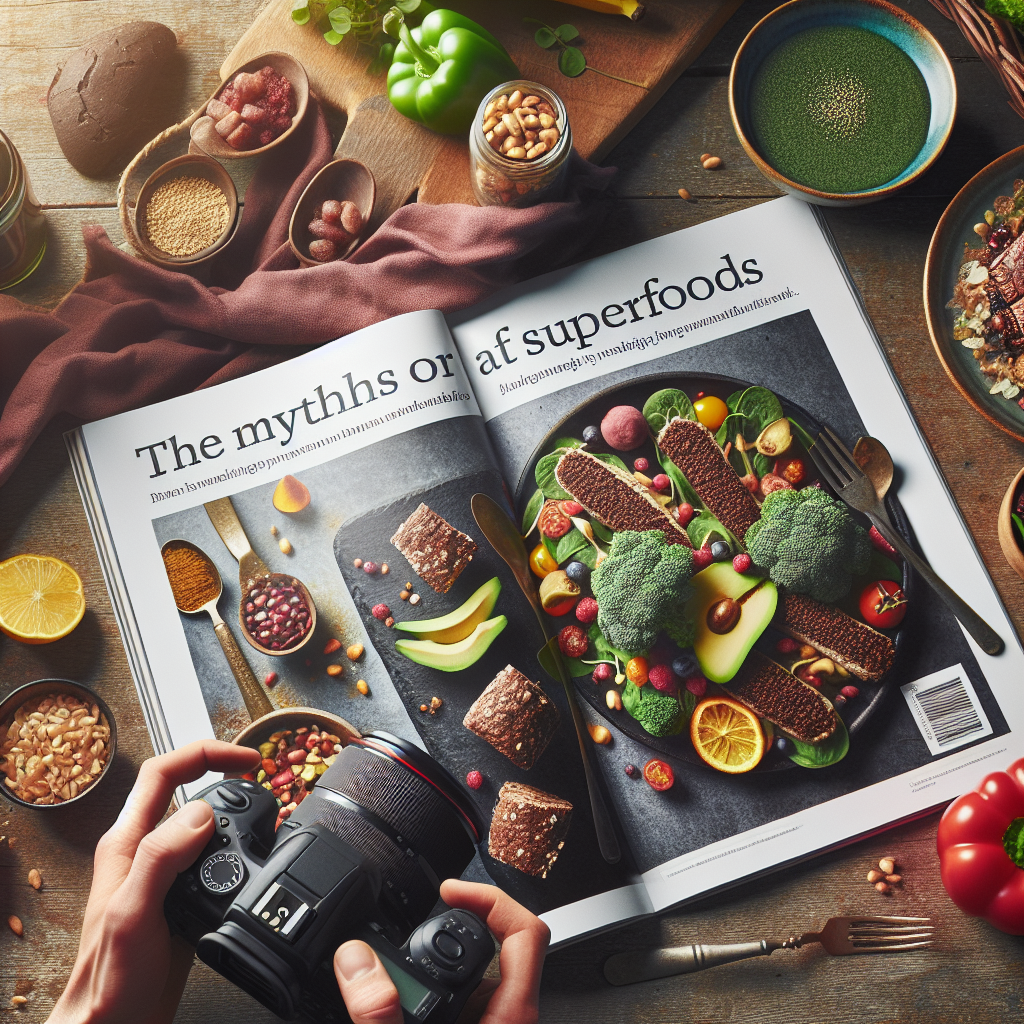
Exploding the Myth about Superfoods

It was Catherine Collins, the chief dietician at St George’s Hospital, London who said that ‘the term superfoods is at best meaningless and at worst harmful’. Superfoods are at the forefront of marketing campaigns and their health benefits are espoused by celebrity endorsements with their happy, healthy faces beaming out of advertising hoardings nationwide. But apart from unusual pronunciations (quinoa being keen-wa and acai being ah-sigh-ee) are they really that special? Tellingly, in 2007 the European Union banned the word ‘superfood’ from any marketing materials or packaging unless it could be backed up by rigorous scientific research. When trying to sort fact from fiction it’s advisable to consult industry registered dieticians who are qualified, over the ‘nutritionists’ who need no formal qualifications or knowledge but manage to peddle their beliefs as fact on daytime TV.
Superfoods are informally classed as being a food that’s especially nutritionally dense, packed with vitamins or antioxidants, for example, but is low in calories. They tend to be fruits or vegetables and, to the joy of marketers, can be exotic and command a high price.
Blueberries
Chuck Grimmett
The Claims: The humble North American blueberry is the flag-waving favourite of many commercials, being a good source of vitamin K which is used in blood clotting, vitamin C and manganese. They are also rich in phenolic antioxidant compounds such as anthocyanins which give them their distinctive colour and the potential to reduce the risk of cancer.
The Facts: Dietician and spokesperson for the British Dietetic Association (BDA), Alison Hornby recommends them as ‘an excellent choice as one of your five-a-day but, as yet, there is no conclusive proof that the health claims of cancer risk reduction exists.’ It is interesting that spinach and kale are both richer in vitamins C and K and manganese but are not classed as superfoods.
Goji berries
Marufish
The Claims: In the mid to late 2000s goji berries were touted as a miracle remedy that protected against cardiovascular disease, cancer while improving brain activity, the immune system and life expectancy. Mentioned in the same breath as a staple Chinese medicine for 6,000 years and eaten by Madonna; there was an almost unstoppable marketing drive with celebrity cooks and lifestyle gurus jumping on the red berried bandwagon.
The Facts: Nutritionally, however, despite their containing vitamins A, C and B2 and the minerals iron and selenium together with antioxidant polysaccharides there is no reliable evidence to suggest benefits to immunity, cardiovascular disease or life expectancy. The other proposed advantages from eating the fruits have no credible evidence to date and any positive health correlation comes from tests done with purified extracts at much higher concentrations than the berries contain.
Wheatgrass
Steven Depolo
The Claims: Hyped as having a higher nutritional content than any other vegetable, it is said that drinking wheatgrass protects against inflammation, improves circulation and builds red blood cells.
The Facts: Nutritionally, wheatgrass has vitamins A, C and E and minerals iron, calcium and magnesium. It is the chlorophyll though that proponents of wheatgrass class as being the key to its superfood status. They maintain that chlorophyll is so similar structurally to haemoglobin that it boosts red blood cell production. There is no scientific proof for this. Alison Hornby also commented that ‘There is no sound evidence to support the claim that wheatgrass is better than other fruits or vegetables in terms of nutrition’.
Garlic
Isabel Eyre
The Claims: Famed for its anti-vampire properties, garlic possesses a number of good dietary properties too. It contains vitamins C and B6 and the minerals manganese and selenium together with the antioxidant allicin, the chemical responsible for the distinctive aroma.
The Facts: Evidential reviews have been inconclusive although have leaned towards the positive benefits towards reducing blood pressure, cholesterol and probable protection against bowel and stomach cancers. Garlic can be used in cooking as an alternative to salt so can be an indirect aid to avoiding high blood pressure. Garlic supplements are not currently recommended as an aid to health.
Beetroot
Rod Waddington
The Claims: Recent health claims would cite beetroot as a superfood for its ability to boost exercise performance, lower blood pressure and even prevent dementia.
The Facts: Beetroot is particularly high in the minerals iron and magnesium. The vegetable also has nitrates, antioxidants such as betacyanin and amino acids including betaine and folate. Scientific studies from 2013 concluded that beetroot juice has both a positive, albeit modest, reduction in blood pressure and moderate improvements for amateur athletes. As yet no study has been undertaken rigorously enough to support or dispute the effect on cognitive function.
Conclusion
Whether a foodstuff can be deemed ‘super’ seems largely inaccurate from a nutritional standpoint. Scientific consensus says that nearly all fruits and vegetables provide valuable minerals, antioxidants and vitamins that are required to maintain a healthy body but there is no conclusive proof that any deserve the term ‘super’. Eating a wide variety of fruits and vegetables, ensuring you have at least your ‘5-a-day’ is the best advice and, on reflection, appears eminently sensible.