
How Aquaponics will save Great Britain

Earlier this year the Cambridge Institute for Sustainability Leadership released a sobering report that warned of an increasing arable land shortage for feeding our population. In 2030 there will be 70 million people living in the UK and a prospective deficit of 2 million hectares of productive farmland. There are many reasons why our current land isn’t being used to its full potential. These include directives from Europe and the change of use towards fuel crops rather than food crops but a longsighted approach is needed if we are going to look at sustainability for our future.
Solving the impending land crisis
What we need is a way of producing more food using less land. This may sound like a pipe-dream and, indeed, pipes are involved but we need a paradigm shift in how we view crop farming in this country. This is where aquaponics comes in.
What is aquaponics?
Modern aquaponics is a relatively new method of food production that blends the existing techniques of aquaculture and hydroponics that has the benefits of both but none of the drawbacks. Aquaculture – essentially the farming of fish – needs care over fish waste removal that results in a loss of water and nutrients that need replacing. Hydroponics – growing plants in a water-based solution – uses expensive plant food nutrients and system flushing that creates waste.
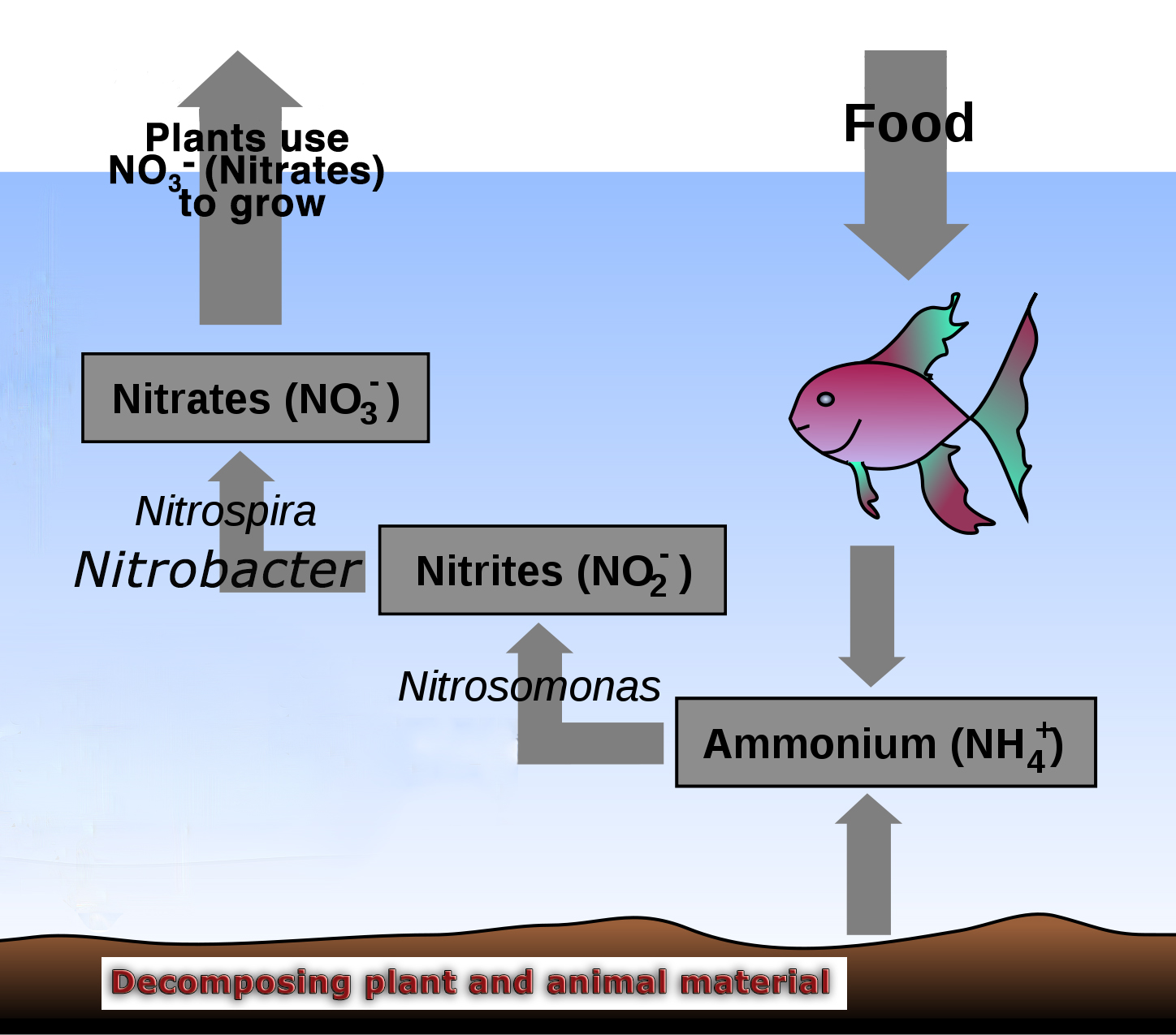
Aquaponics uses the negative issues of both and makes them into sustainable positives by integrating fish and plant production. Fish excreta, rich in ammonium compounds, provide the organic food source for the plants to grow in and, in turn, the plants are a natural filter to clean the water for the fish to live in. Two types of bacteria are added to the water which remove the toxic ammonium compounds and also create free plant food:
Nitrosomonas europea
These bacteria metabolise the ammonium compounds from fish excreta to produce nitrites
Nitrobacter and nitrospira
In turn, these bacteria metabolise the nitrites through oxidation into nitrates that serve as the plant food
Organic waste from decomposing matter in the tanks can be used to feed worms or other arthropods which are then used to feed the fish. Aquaponics is an elegant way of producing high yield food with a low input cost.
The resources benefits compared to traditional farming
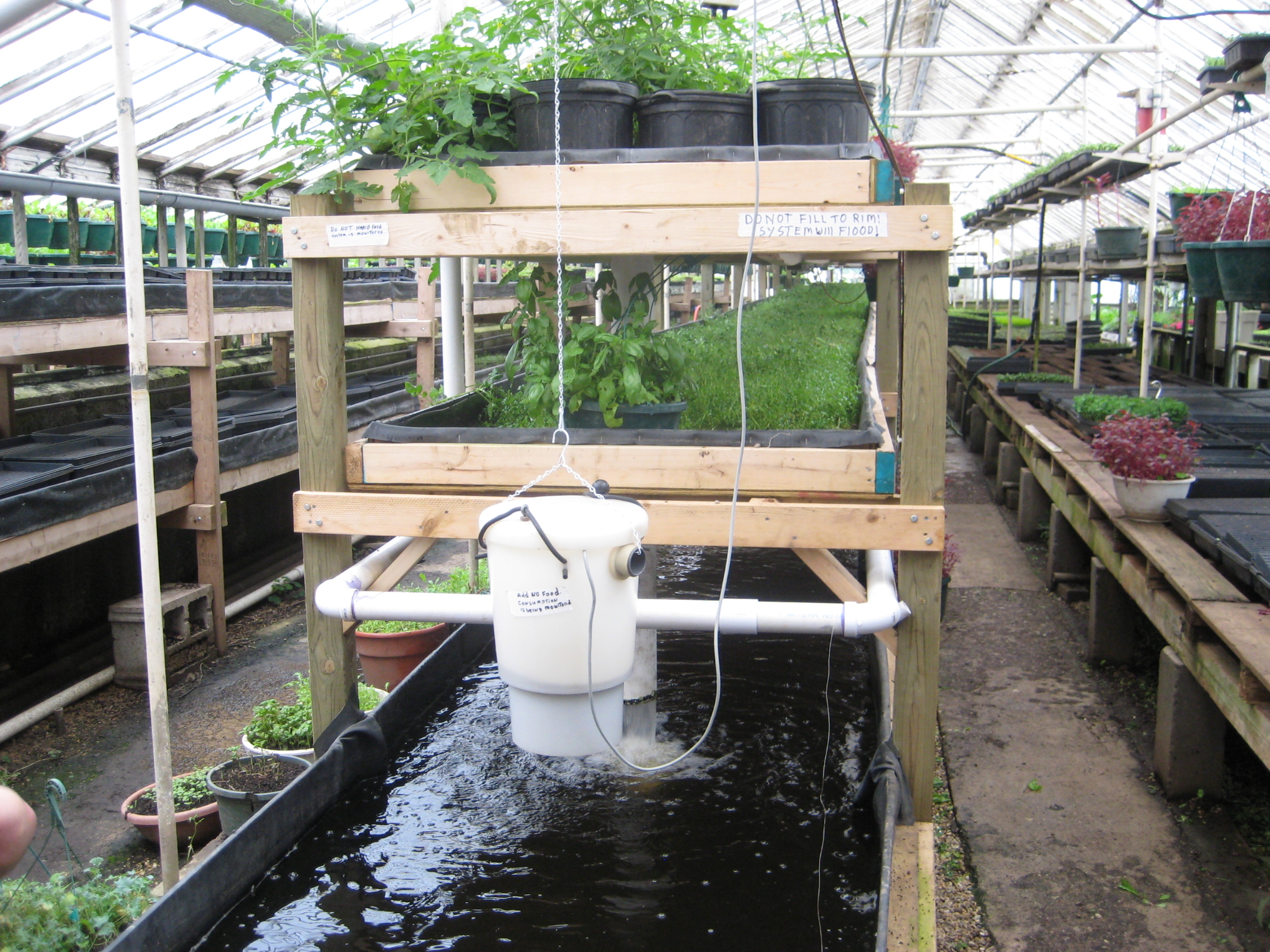
- Aquaponics is a low energy farming method. The main need for power is used in energy efficient pumps that take the nutrient-rich water up to the plants. Gravity brings it back down after it’s naturally filtered by the roots.
- It’s more efficient with water than traditional arable farming where it is estimated at being around 10% water usage.
- Classically thought of waste products form an essential part of the system and become a valuable resource.
- There are no toxic run-offs from aquaponics.
Europe’s Biggest Aquaponics Farm
In Blackstone, near Bristol resides Bioaqua Farm – the biggest aquaponics farm in Europe. Their farm system utilises a closed loop where animal, trees and plants grow in a self-sufficient sustainable zero waste system. They say ‘The bedding from the duck coop become nutritious mulch for our orchard, the water from the pond is utilised to water the fruiting shrubs, bees from our colonies are helping pollinating the apple and pear trees. The wormery is helping getting rid of greenhouse green waste just to give back plenty of worm juice to feed the plants with.’
Future Farming in Great Britain
Aquaponics does seem like a genuinely exciting way forward for future farming in the UK and when you compare it to the trending idea of the culturally unacceptable suggestion of eating insects as the future it can’t come soon enough.