

Hot Water Crust Pastry

Ingredients
- 450 grams plain flour
- 1 teaspoon salt
- 200 grams lard
- 225 mls milk and water mixed in equal proportions
Accompaniment
SponsoredOrigin Pinot Grigio Organic
The nation's favourite tipple in an organic bundle. A great value wine, from Italy's ever popular Pinot Grigio grape. This wine is perfectly balanced with juicy pear and peach notes and soft floral aromas
Description
Similar in consistency to short crust pastry except the dough is stiff enough to stand alone without the support of a dish
Method
-
1
Warm a mixing bowl and sift in the flour and salt, make a well in the centre.
Heat the lard in the milk and water in a saucepan over a medium heat until just boiling.
Pour into the well in the flour and stir quickly with a wooden spoon until thick.
Continue working by hand to form smooth dough.
Use now in your recipe as directed.
Chef's Tips
the pastry is shaped by hand whilst still warm and then filled and the top put on. Prepare the filling before making the pastry. It’s best to cut off the piece for the lid first and leave it covered with a towel in a bowl over hot water to keep it warm. It is usually used for pork pies, game pies and other pies needing a hand raised pastry.
As the name implies, the pastry is made by heating water, melting the fat in this, bringing to the boil, and finally mixing with the flour. This can be done by beating the flour into the mixture in the pan, or by kneading on a pastry board. The result is a hot and rather sticky paste that can be used for hand-raising (shaping by hand), sometimes using a dish or bowl as an inner mould. As the crust cools, its shape is largely retained, and it is filled and covered with a crust, ready for baking. Hand-raised hot water crust pastry does not produce a neat and uniform finish, as there will be sagging during the cooking of the filled pie. This is generally accepted as the mark of a hand-made pie. It is possible, however, to bake the pastry in a mould, as with other pies.
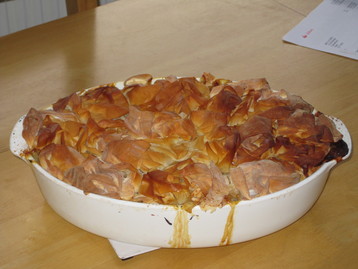
When baked, the crust attains a deep, shiny, golden outside, which is quite crisp, this allows the pies to be filled with a savoury jelly or gravy as they cool, often through a central hole in the crust made expressly for the purpose during the raising of the pie.
Similar Recipes
View all similar



Comments (0)