
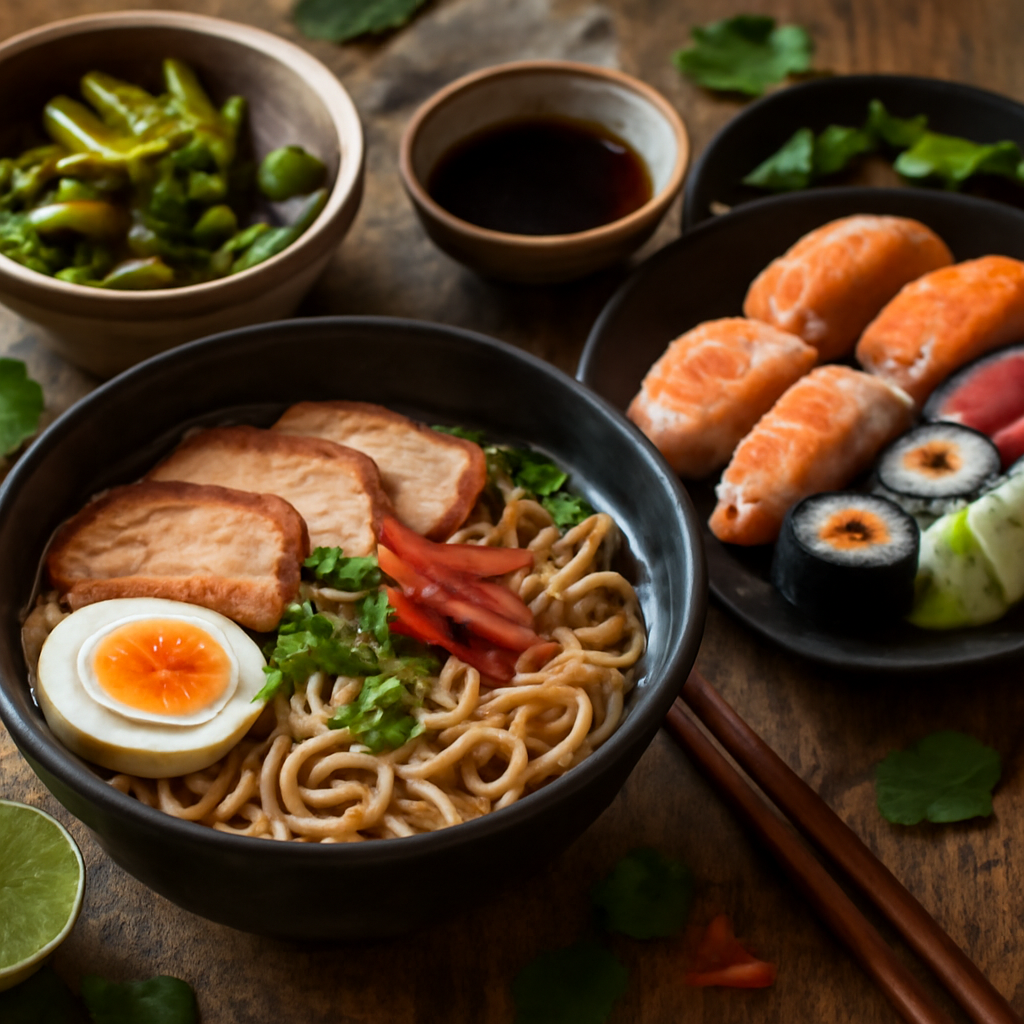
Going Japanese – getting into delicious Asian Cuisine

We British are an interesting lot. We’re famous for being a bit stiff-upper lipped, a bit slow to embrace change and, to be honest, a little bit reluctant to venture outside our comfort zone. This stereotypical view may be have been true once but today the Brits are all for trying new experiences and where better to than to experiment with our culinary endeavours.
Why try Japanese?
Annica Wainwright of the Square Meal Guide says she likes ‘the clean, fresh tastes and the fact that most dishes are based on just a few good-quality ingredients. The food is usually very beautifully presented but it doesn't just look good – it makes you feel good, too. Light flavours and a comparatively low fat content means you can eat a lot and still feel great afterwards.’
A Quick Starter Guide
Trying something new often needs a crumb of confidence so we’ve compiled a starter guide to seven basic Japanese staples to consider. Japanese cuisine tends to be more locally and seasonally based than that of the UK and this is borne out by the variation of ingredients in typical dishes.
Sushi
Possibly the most famous Japanese dish is the rice-based food - sushi. It can be prepared with brown or white rice seasoned with vinegar and is typically served with raw seafood although some now opt for cooked fish or vegetarian varieties. Seafood is the most traditional though and if you enjoy tangy and creamy flavours and textures then uni with sea urchin roe is the way to go.
Why not take a look at one of our many sushi recipes.
Ramen
This is a simple dish of egg noodles in a meaty, salty broth. Each of the islands that make up Japan has their own specialities including Hokkaido’s pungent miso (fermented soya beans in salt and the fungus Aspergillus oryzae) ramen, and Kyushu’s tonkotsu ramen which contains pork bone. Ramen can be served with a variety of spicy and strong flavoured toppings such as ground pork, chopped garlic leeks or white pepper.
Try one of our ramen recipes.
Tonkatsu
Not to be confused with tonkotsu, this is one of the dishes that wears its Western heritage on its sleeve. It is made up of a recognisable breaded, deep-fried pork cutlet served with shredded cabbage and a tasty miso soup.
Try one of our tonkatsu recipes
Tempura
This is a dish made of sea food or vegetables which have been battered then deep-fried. The batter is famous for its light and fluffy texture and this is due in part to the use of sesame seed oil and sparkling water. The batter mix also consists of a light flour that is mixed in small quantities with chopsticks. The deep fried pieces are then served alongside a soy sauce dip.
Try one of our tempura recipes.
Soba
Buckwheat is hardier crop than rice and is grown in the more mountainous regions of Japan. Soba are long, spindly buckwheat noodles which are usually served with a hot soy sauce flavoured broth.
Why not try one of our soba recipes?
Yakitori
Japan’s version of the barbecue kebab is revealed in yakitori. This is charcoal grilled chicken presented on skewers where most of the bird is accepted as on the menu. Not just the breast; the gizzards, organs, skin and dark meat are all considered fair game.
Take a look at one of our yakitori recipes.
Sukiyaki
This is a popular meal made in a hot pot (nabe). Its liquid base is a ubiquitous sweet soy sauce broth. The accompaniments including sliced meat, vegetables, mushrooms and noodles are placed in a dip of freshly beaten egg before eating.
Be the first to submit your delicious sukiyaki recipe to MyDish!
Hopefully, this starter guide will have been food for thought. Japanese cuisine is exciting, wide-ranging and a very healthy option to explore if you keep an eye on the salt content.