
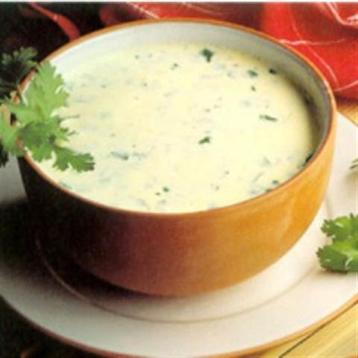
Cream Of Asparagus Soup

Ingredients
- 950 grams fresh asparagus
- 1 large onion, chopped
- 2 sprigs fresh thyme
- 3 tablespoons unsalted butter
- 5 to 6 cups chicken stock
- 115mls dry white wine
- ½ cup double cream or crème fraîche
- ¼ teaspoon fresh lemon juice, or to taste
- Salt and freshly ground black pepper
Accompaniment
SponsoredFleurie Georges Duboeuf
The most favored of all the Beaujolais Cru, Fleurie enjoys a very floral bouquet with a refined, smooth taste. An elegant, beautifully made more-ish red with wild strawberry fruit and a fleshy texture.Buy this wine if you like: Light-bodied red with ripe fruit, perfect slightly chilled on a warm summer afternoon.
Description
An exquisite smooth, creamy, asparagus soup, the soup keeps, covered and chilled, for up to two days. If making ahead, add last tablespoon butter and lemon juice after reheating.
Method
-
1
Cut the tips from 12 asparagus spears, 1½ inches from the top and halve the tips lengthwise if thick, reserve for garnish, cut the stalks and all the remaining asparagus into ½ inch pieces, cook the onion and thyme in 2 tablespoons of the butter in a large heavy pan over a moderate to low heat, stirring, until the onions are softened about 2 minutes.
Add the white wine, asparagus pieces, salt, and pepper to taste, bring to the boil, and cook until the liquid is reduced by half, add 5 cups of the chicken stock bring to the boil, reduce the heat and simmer, until the asparagus is tender, about 8 to 10 minutes.
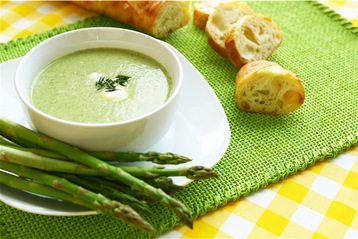
While the soup simmers, cook the reserved asparagus tips in boiling salted water until just tender, 3 to 4 minutes, then drain. Purée the soup in batches in a blender until smooth, transferring to a bowl (use caution when blending hot liquids), and return to the pan. Stir in the crème fraîche or double cream, and then add more stock/broth to thin the soup to the desired consistency. Season with salt and pepper, bring the soup to a boil, and whisk in the remaining tablespoon of butter. Add the lemon juice and garnish with the asparagus tips. Serve and Enjoy!
Chef's Tips
British asparagus, with its intense, complex flavour, is considered by the British, at least to be the finest in the world. Its deep, verdant flavour is attributed in large part to Britain’s cool growing conditions. Traditionally only green asparagus has been grown here, but there are numerous types and varieties. Regardless of whether you’re Buying Tips thin 'sprue' asparagus or extra-large 'jumbo' spears, always choose stems that are firm and lush, rather than dry and wrinkly.
Avoid any stems that are discoloured, scarred or turning slimy at the tips. If you're using whole spears, then make sure the buds are tightly furled. If you're making soup, though, you could also use the cheaper, loose-tipped spears you sometimes find on market stalls.
Despite what you may have read or heard, it's not necessary to buy an asparagus steamer, nor to bind the asparagus into a bundle and cook it upright in a pan. For the best results, wash the stems thoroughly in a sink full of cold water. Then trim the stalks and, if the lower part of the stem seems tough when sliced and eaten raw, lightly peel the bottom third of the stem. Drop loose spears into a pan of boiling water and cook until just tender.
The cooking time varies according to the thickness of the stems but ranges between 3-5 minutes. Once it's cooked, drain, and pat dry on kitchen paper. If you're serving it cold, you'll get the best flavour if, rather than cooling under the cold tap, you spread the hot asparagus out to cool on some kitchen paper.
Traditionally matched with hollandaise sauce, asparagus picked just a day or so ago (try your nearest farmers' market) requires minimal messing with. Enjoy it with a drizzle of olive oil, a twist of black pepper and perhaps a few shavings of Parmesan cheese.
Earliest records of asparagus cultivation trace it back to Greece some 2,500 years ago. The Greeks believed that asparagus possessed medicinal properties and recommended it as a cure for toothaches. It was highly prized by the Romans who grew it in high-walled courtyards. Asparagus has been grown in England since the sixteenth century (it is not widely cultivated anywhere else in the UK) and during the nineteenth century it caught on in North America and China
Asparagus contains more folic acid than any other vegetable. It also a source of fibre, potassium, vitamins A and C and glutathione, a phytochemical with antioxidant and anticarcinogenic properties
Buying
Look for firm but tender stalks with good colour and closed tips. Smaller, thinner stalks are not necessarily tenderer, in fact thicker specimens are often better due to the smaller ratio of skin to volume.
Storing
Once picked, asparagus rapidly loses flavour and tenderness, so it really is worth eating it on the day you buy it. If that isn't possible, store asparagus in the fridge with a damp paper towel wrapped around the bottom of the stalks and you can get away with keeping it for a couple of days.
Preparing and Cooking
Wash in cold water and remove the bottom ends of the stalks (with fresh asparagus they will snap off cleanly). Boil or steam quickly until just tender, around 4 to 7 minutes depending on thickness. Using an inexpensive asparagus steamer will help ensure perfect results as it cooks the stalk bottoms more quickly than the delicate tips.
Similar Recipes
View all similar



Comments (0)